Baby Body Wash Hot Sale in Africa – Market Trends, Demand Growth & Business Opportunities
Explore why baby body wash is booming in Africa. Learn about market trends, consumer habits, demand drivers, and OEM opportunities for international brands and distributors.
Table of Contents
When it comes to caring for babies, every parent wants the best. In recent years, baby body wash has become a must-have product in many African households. But what makes it so popular? How is it used across the continent? And why is the demand growing so fast? Let’s explore the world of baby body wash in Africa, from its uses to its booming sales.
Today, the African personal care market is not only expanding in baby categories but also showing strong growth in hygiene segments such as antibacterial gel, antibacterial shower gel for men, and family hygiene solutions. This reflects a broader consumer shift toward health-conscious and skin-safe cleansing products.
But what makes baby body wash so popular in Africa?
How is it used across different regions?
And why is demand accelerating year after year?
Let’s explore the full picture — from consumer behavior to market data and future business opportunities.
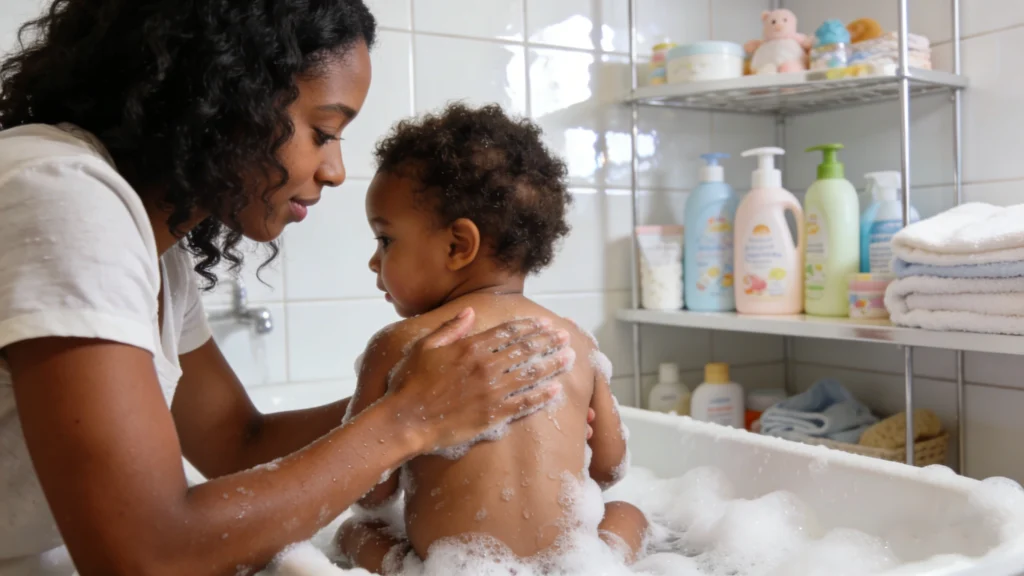
What Is Baby Body Wash?
Baby body wash is a specially formulated liquid cleanser designed for infants and toddlers. Unlike traditional bar soaps, it is:
Mild and pH-balanced
Hypoallergenic (less likely to trigger irritation)
Tear-free and gentle on eyes
Dermatologically tested
Free from harsh chemicals
Most baby body wash formulas avoid parabens, phthalates, SLS/SLES, and artificial colorants, which can irritate delicate newborn skin.
Key Functional Ingredients
Baby body washes often contain gentle, skin-loving ingredients such as:
Aloe Vera – Soothes and hydrates sensitive skin
Oat Extract – Relieves dryness and itching
Chamomile – Reduces redness and calms inflammation
Glycerin – Helps retain moisture and protect skin barrier
Shea Butter (popular in Africa) – Deep nourishment
Globally trusted brands like Johnson’s Baby Head-to-Toe Wash are widely used across African urban centers because they offer safety, convenience, and brand credibility.
Interestingly, as African consumers become more hygiene-aware, many families also use mild antibacterial gel products for adults while keeping baby-specific washes separate for infants. This demonstrates the increasing segmentation of hygiene routines within households.
How Is Baby Body Wash Used in Africa?
In Africa, baby body wash is part of daily life for millions of families. Here’s how it fits into routines:
Daily Baths: A Ritual of Cleanliness
In hot and humid countries such as Nigeria, Ghana, Ivory Coast, and Kenya, babies are often bathed once or even twice daily due to heat and sweat.
Parents prefer liquid baby body wash over bar soap because:
It lathers easily
Rinses quickly
Leaves no residue
Is more hygienic to store
In rural communities where water supply may be limited, parents often dilute body wash with water, making a small amount last longer. This purchasing behavior influences product packaging sizes and concentration formulas.
Meanwhile, in adult segments, products like antibacterial shower gel for men are gaining popularity in urban Africa, especially among young professionals who seek deep cleansing after long working days. This shows the region’s overall shift toward liquid cleansing formats.
Sensitive Skin Care in Hot Climates
African climates can be harsh on baby skin. Heat, dust, and humidity increase the risk of:
Heat rashes
Dry patches
Eczema flare-ups
Diaper irritation
Baby body wash with soothing botanical extracts is highly preferred.
In South Africa, for example, natural ingredients like rooibos and baobab are increasingly incorporated into formulations. Parents look for gentle baby cleanser solutions that are free from strong fragrance.
While adult products such as scented antibacterial gel are appreciated for freshness and odor control, baby products are expected to remain fragrance-light and ultra-mild.
This difference creates clear market segmentation opportunities for manufacturers and private label brands.
Convenience for Busy Parents
Urbanization is reshaping parenting habits. In cities like Lagos, Nairobi, Accra, and Johannesburg:
Dual-income households are increasing
Time-saving products are prioritized
Packaged hygiene solutions are replacing traditional mixtures
Baby body wash offers:
Easy dispensing
Travel-friendly packaging
Multi-use (body + hair formulas)
Consistent quality
Small travel-size bottles are especially popular for trips and daycare use.
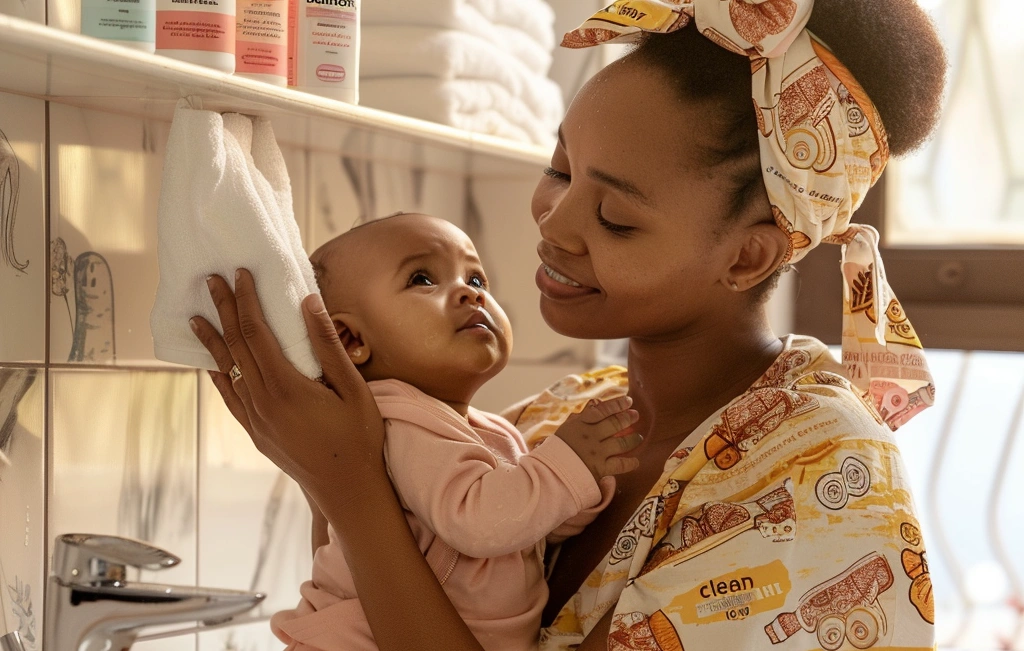
Why Is the Demand Growing in Africa?
Several factors are driving the rise of baby body wash in Africa:
1. Increasing Birth Rates & Young Population
Africa has the world’s highest birth rate, with over 40% of the population under 15 years old. As more people move to cities, they adopt modern parenting habits, including using specialized baby products. In Lagos, Nigeria, for example, the number of urban families buying baby body wash has doubled in the past five years.
2. Rising Disposable Income
As economies grow, families have more money to spend on quality products. In countries like Kenya and Ethiopia, middle-class parents are willing to pay extra for safe, imported baby body washes. Even in lower-income areas, affordable local brands (e.g., Kodak Baby Wash in South Africa) are popular.
3. Awareness of Child Health & Hygiene
Health campaigns, hospitals, NGOs, and social media influencers are educating parents about:
Avoiding harsh soap
Maintaining skin barrier protection
Choosing mild baby wash for newborns
Many health authorities now recommend gentle baby wash instead of traditional alkaline soaps.
This education-driven demand shift mirrors similar trends seen in antibacterial shower gel for men, where marketing emphasizes protection, freshness, and bacteria defense.
4. Cultural Shifts Toward Modern Products
Traditional cleansing practices such as herbal mixtures or ash-based cleaning are gradually declining in urban areas.
Younger parents who grew up exposed to global brands prefer:
Convenient packaging
Standardized formulas
Trusted brand names
Modern retail environments reinforce these habits.
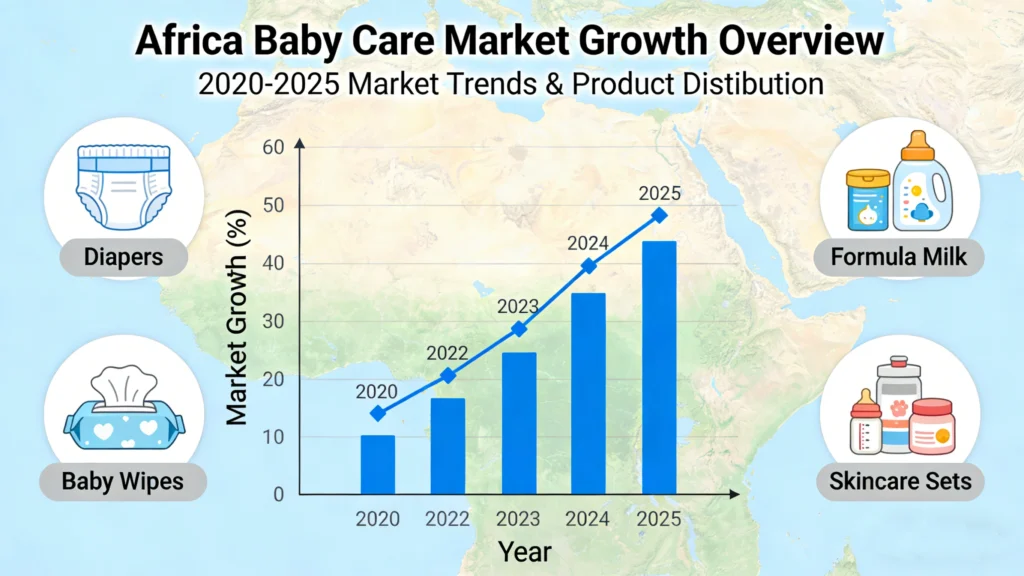
Sales Trends: A Booming Market
The African baby body wash segment shows strong expansion potential.
Market Snapshot:
Estimated market value: USD 1.2 billion (2023)
Forecast: USD 2.1 billion by 2030
CAGR: ~7% annually
Leading Countries:
Nigeria
South Africa
Kenya
Egypt
Popular Brands:
Johnson’s
Aveeno
Cetaphil
Molfix Baby
Purity Baby
Retail Channels:
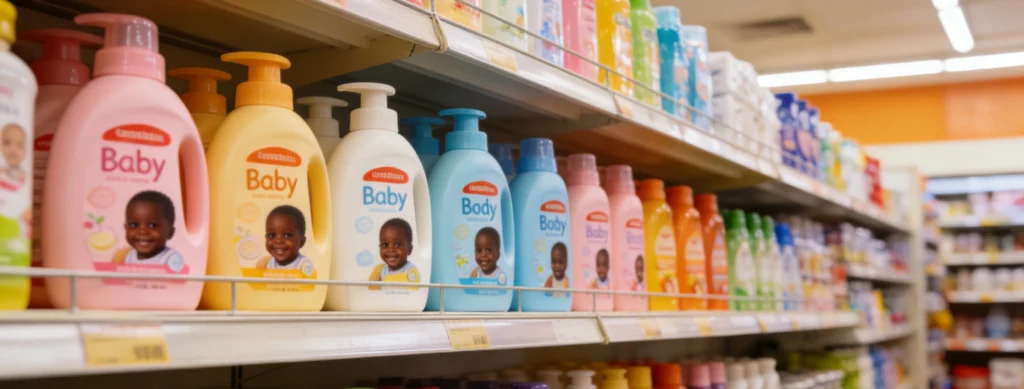
Supermarkets (Shoprite, Game)
Pharmacies
Online platforms (Jumia, Konga)
Traditional markets
In rural regions, informal trade still dominates distribution.
As liquid hygiene products gain traction, categories like moisturizing baby shower gel and mild antibacterial body wash are benefiting from cross-category consumer education.
Challenges and Opportunities
While the market is growing, there are challenges:
- Price sensitivity: In low-income areas, parents may opt for cheaper, unbranded products.
- Counterfeits: Fake baby body washes (with harmful chemicals) are sold in some markets, risking babies’ health.
- Infrastructure: Poor roads in rural areas make it hard to distribute products.
Major Opportunities
1. Local Manufacturing
Producing within Africa reduces:
Logistics costs
Import tariffs
Supply chain risks
2. Natural & Local Ingredients
Using African botanicals like:
Baobab
Moringa
Shea butter
Rooibos
Attracts eco-conscious and culturally connected consumers.
3. Market Education
Brands that invest in education campaigns can build long-term trust.
4. Product Line Expansion
Families purchasing baby body wash are also potential buyers of:
Family antibacterial gel
Gentle adult shower gels
antibacterial shower gel for men
scented antibacterial gel for premium segments
This cross-selling opportunity creates strong brand portfolio expansion potential.
Future Outlook – A Bright Future for Baby Body Wash
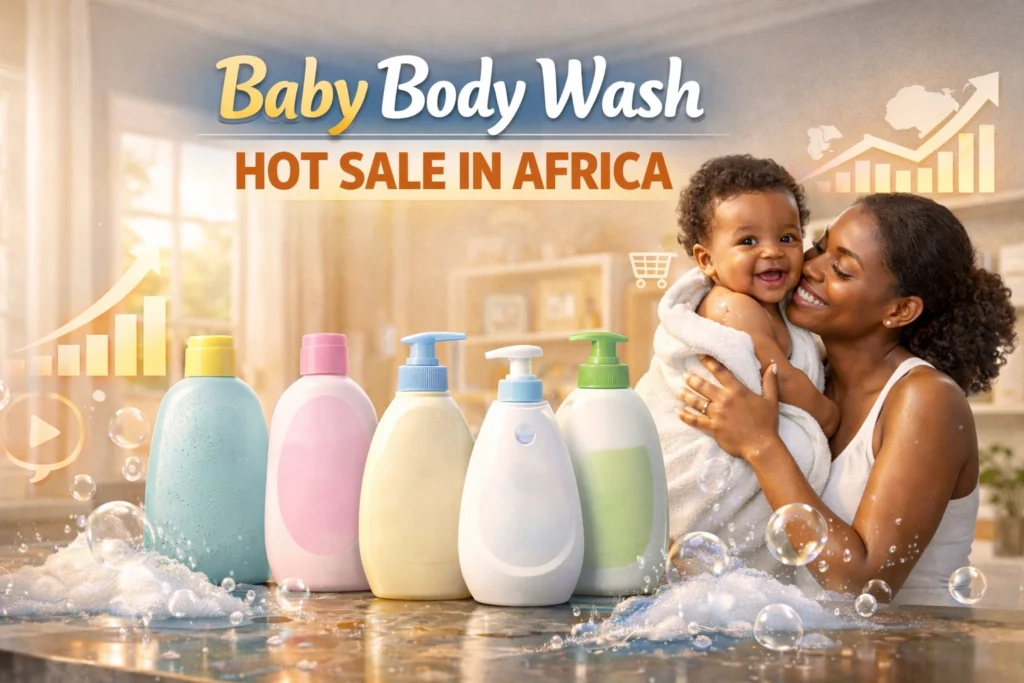
Baby body wash in Africa is more than a product category.
It represents:
Rising hygiene standards
Health-conscious parenting
Modern retail expansion
Economic growth
With continued urbanization and digital retail development, demand for:
Hypoallergenic baby wash
Organic baby cleanser
Moisturizing baby shower gel
Dermatologist-tested infant wash
will continue rising.
For B2B distributors, wholesalers, and private label brands, Africa offers long-term growth potential across both baby care and hygiene segments.
Partnering for Growth – CASSILLIA OEM/ODM Solutions
As the African cleansing market evolves, reliable manufacturing partnerships become essential.
CASSILLIA is a professional skincare and personal care manufacturer with over 23 years of production experience and 10 years of export expertise. We support global distributors and brand owners with:
OEM & ODM customization
Flexible formulation development
Private label baby body wash production
antibacterial gel and hygiene line expansion
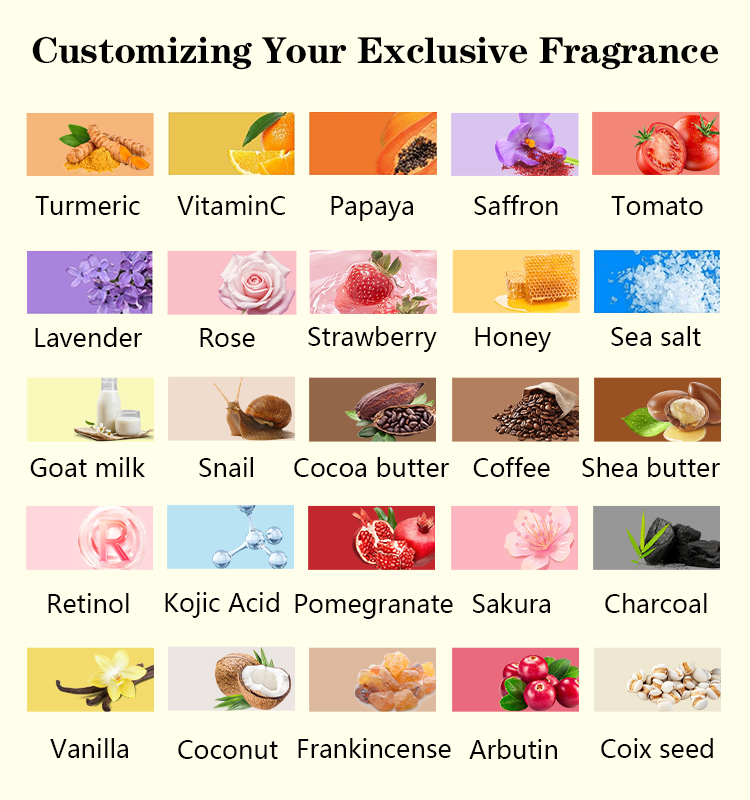
Customized fragrance development
Market trend research for African markets
Strict quality control systems
Whether you are launching a baby body wash line or expanding into antibacterial shower gel for men and family hygiene segments, we provide tailored solutions designed for your target market positioning.
We believe successful partnerships are built on trust, innovation, and shared growth.
Let’s build the next successful baby care brand together.

Chinese Top Skin Care Supplier
Building 8, Huanya Industrial Park, Taiping Town, Conghua District, Guangzhou, China
Tel: +86 153 3808 5627
E-mail: infocassillia@gmail.com
quick links
Products
Why CASSILLIA
- OEM/ODM Customization
- Market-Focused
- Reliable Supply Chain
- Competitive Pricing
- One-Stop Solution
- Global Trade Show Experience
- 23 Years of Manufacturing Expertise